Journal app vs notes app: use the one that matches how you think
A notes app is good for quick storage. A journal app is better when context, reflection, privacy, and follow-through matter.
Who this page is for
Best for users who currently live in generic note apps and are deciding whether they need a more reflective, structured workflow.
Why people choose it
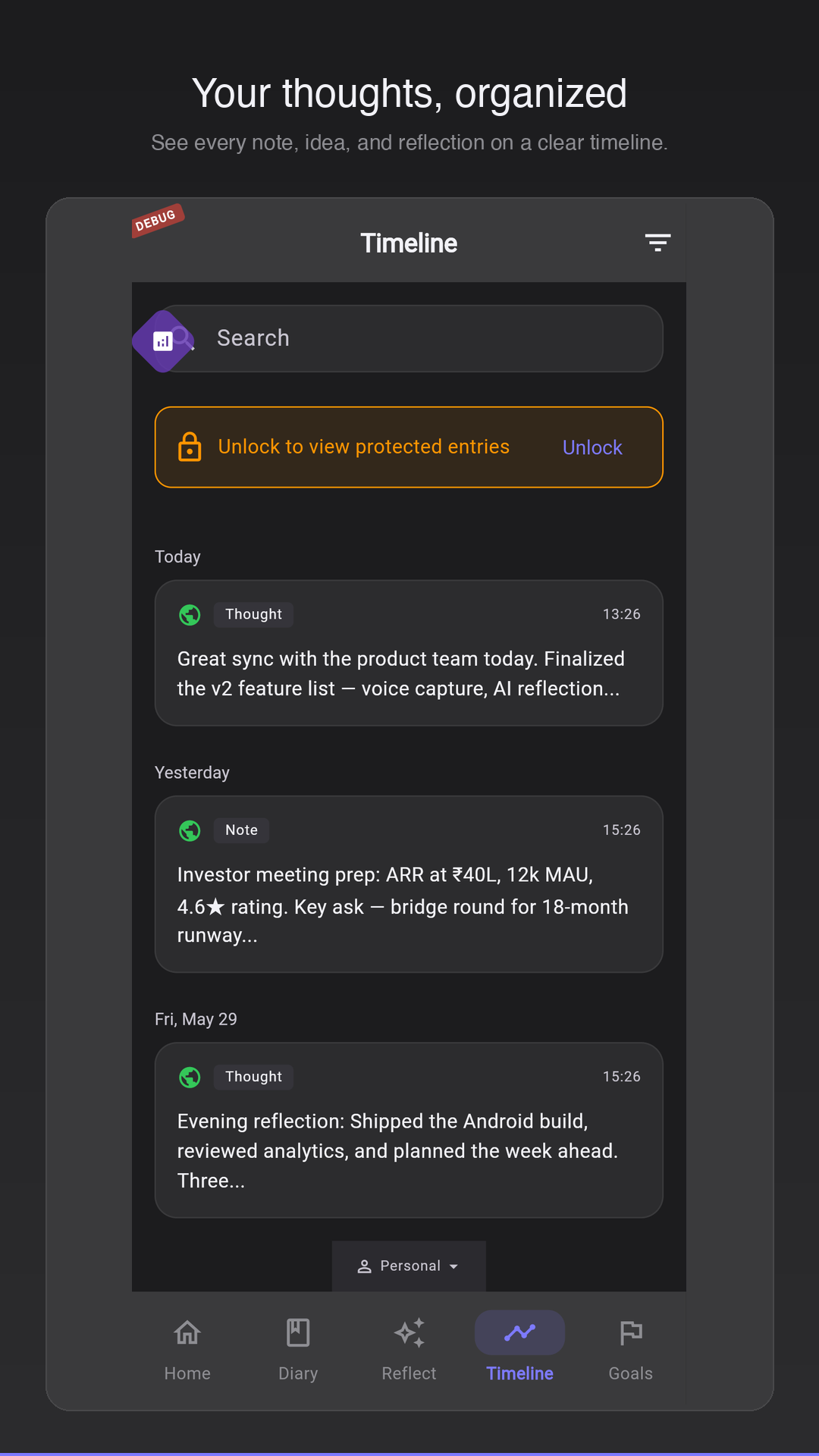
- Keep context around entries, not just loose note fragments
- Add privacy levels and reflection workflows
- Turn notes into reminders, tasks, and plans
Capture once. Use it later.
Striventor helps you move from raw thought capture to reminders, tasks, reflection, and planning without scattering context across separate apps.
Frequently asked questions
When is a notes app enough?
A notes app is enough if you only need quick storage and retrieval and do not care much about reflection or structured follow-through.
When is a journal app better?
A journal app is better when you want to understand patterns, protect private writing, and connect what you capture to action.
Can one app do both?
Yes. That is one of the strongest reasons to use an integrated product instead of splitting everything across separate tools.
Related pages
A practical MindNote AI alternative for capture, privacy, and follow-through
Looking for a MindNote AI alternative? Compare voice capture, privacy, journaling, and action-oriented workflows.
A private journal app built for people who do not want their thoughts mined
Keep a private journal with layered privacy controls, offline-first access, and end-to-end encrypted Vault mode.
A notes to tasks app for turning messy capture into action
Capture notes, voice thoughts, and reminders, then turn them into structured tasks without retyping everything.